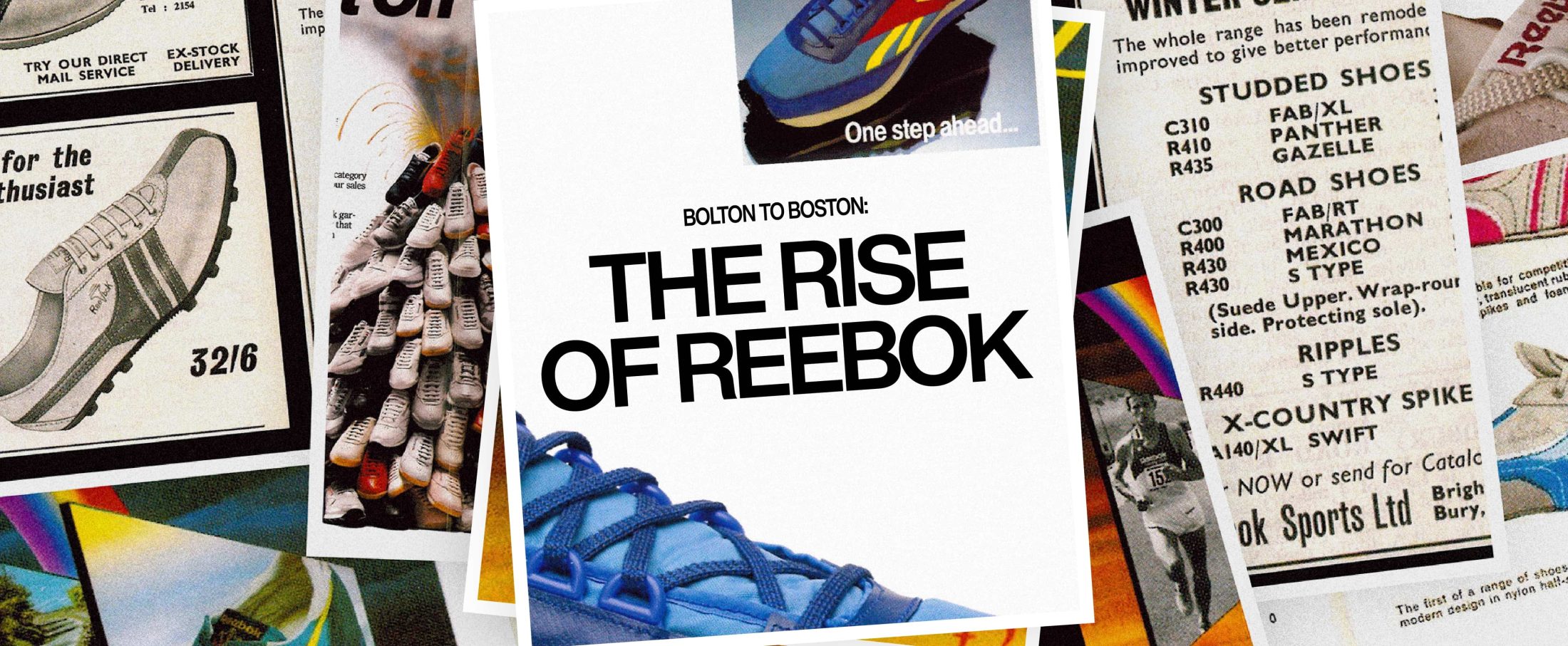
Bolton to Boston: The Rise of Reebok
Share This:


“We needed a brand name. I wanted an animal name and just had a feeling about the letter ‘R’. So I went to the dictionary and found ‘Reebok’.” – Joseph Foster, Co-Founder of Reebok
The story of Reebok takes place in the heart of the North West’s industrial revolution and is one of raw innovation and even a little bit of myth (as all good stories ought to be).
Humble beginnings
Joseph William Foster created his prototypical spiked running shoe – aged just fourteen at the time – above his Dad’s sweet shop that resided in Holcombe Brook, Lancashire, back in 1892. A couple of years later in 1895, ‘J.W. Foster & Sons’ is established as a producer of custom, handmade cross-country and track shoes for elite runners of the era.
After the initial invention, they opened a new workshop on 57 Deane Road, Bolton – a clear indication of how much they believed in the potential of their product. What started off as a humble experiment is about to define a family for generations to come.
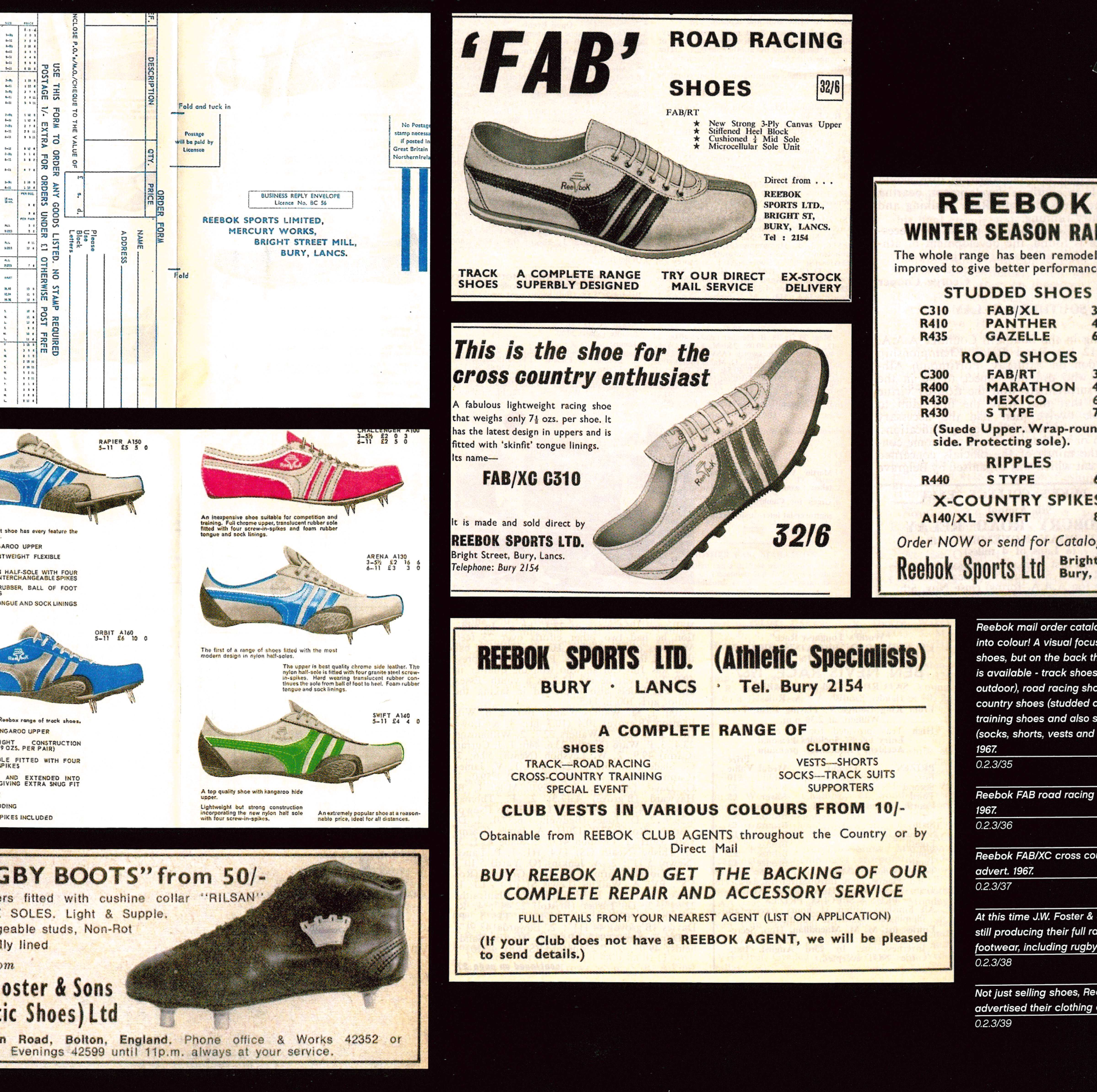
Image Credit: Reebok
Local legends
Business boomed. The demand for spiked running shoes went from non-existent to in abundance. The workshop needed expanding soon after. Rumour goes they had to knock down the pub that was next door. Local punters weren’t best pleased. Rumour also has it that local kids would scale one of the factory walls and root through the ‘rejected trainer’ bins. This resulted in a lot of people wearing odd trainers in close proximity to the workshop…
Alfred Shrubb (known to some as the Slinfold Bricklayer) speeds into the athletics history books by breaking three world records simultaneously in 1904 while wearing Joe’s spiked running shoes. This feat and what Alfred was wearing when he completed it did not go unnoticed by serious athletes at the time.
World War
When WW1 was in full effect, J.W. Foster & Sons repurposes production for the war effort by making and repairing army boots for soldiers on the frontline and beyond. A stray Zeppelin airship drops a bomb on Deane Road in 1916.
After Old Joe’s death in 1933, JW. Foster & Sons was left in the dependable hands of his sons, James and Billy, who quickly formed the England Limited company J.W. Foster & Sons (Athletic Shoes) Ltd.
As WW2 rages in Europe, the company once again shifts production to making and restoring military boots for the war effort. Deane Road was bombed yet again in 1941. Fortunately, it would not be struck for a third time.
Image Credit: Reebok
Foster’s Olympic Works Apprenticeship
Following tradition, James’s son, Jeffrey William, began his apprenticeship at the Foster’s Olympic Works workshop in 1948. Four years later his brother, Joseph William, did the same.
This also happened to be the year when the Olympics were held in London. Athletes sponsored by Fosters included Arthur Wint of Jamaica, who won a gold medal in the 400m. This is Jamaica’s first-ever gold medal. More history made.
The 1950s only brought the Fosters dynasty more success. Nat Lofthouse (also known as the Lion of Vienna) scored the FA Cup final-winning goal for Bolton Wanderers F.C.. Take a guess whose boots ‘The Lion’ was wearing when he put the ball in the back of the net…
The road to global
Joseph and Jeffrey took the plunge in 1958 and started Reebok. The name was coined after the African antelope, and their new HQ is based just 5 miles down the road from the Foster workshop.
Image Credit: Reebok
Expansion took place in the 1960s as Reebok began exporting overseas and marketing its products in international magazines. The trademark ‘shoes for use in athletic sports’ was patented in 1965. Later on in the decade, Reebok made its first appearance at the National Sporting Goods Association tradeshow in Chicago. Yet another milestone for the Bolton brand, and before the decade was completely done, Reebok released the World 10.
Reebok World 10
Way, way ahead of its time, Reebok’s World 10 provides athletes with gold medal-winning footwear and notable world record-breaking performances. A year after its release, Ron Hill wins the 74th Boston Marathon. You already know what he was wearing at the time.
Even more expansion takes place in the 1970s as Reebok secures a deal with Lawrence Sports Ltd, allowing them to export footwear to Australia, New Zealand, South Africa and Canada. It’s fair to say that Reebok is officially worldwide.
Reebok Aztec OG
Reebok can’t stop making history.
Layered in lore, Reebok’s Aztec hallmarked 75 years of racing shoe specialisation, and was originally manufactured in the label’s Bolton factory back in the 1970s. Debuting as a track shoe, the design represented the cutting-edge of running technology at the time thanks to its utilitarian ghilly loops, EVA cushioning wedge and streamline profile. For our 25th anniversary celebrations, we’ve made even more history by bringing this retro grail back – in OG format and colour blocking – as a size? exclusive.
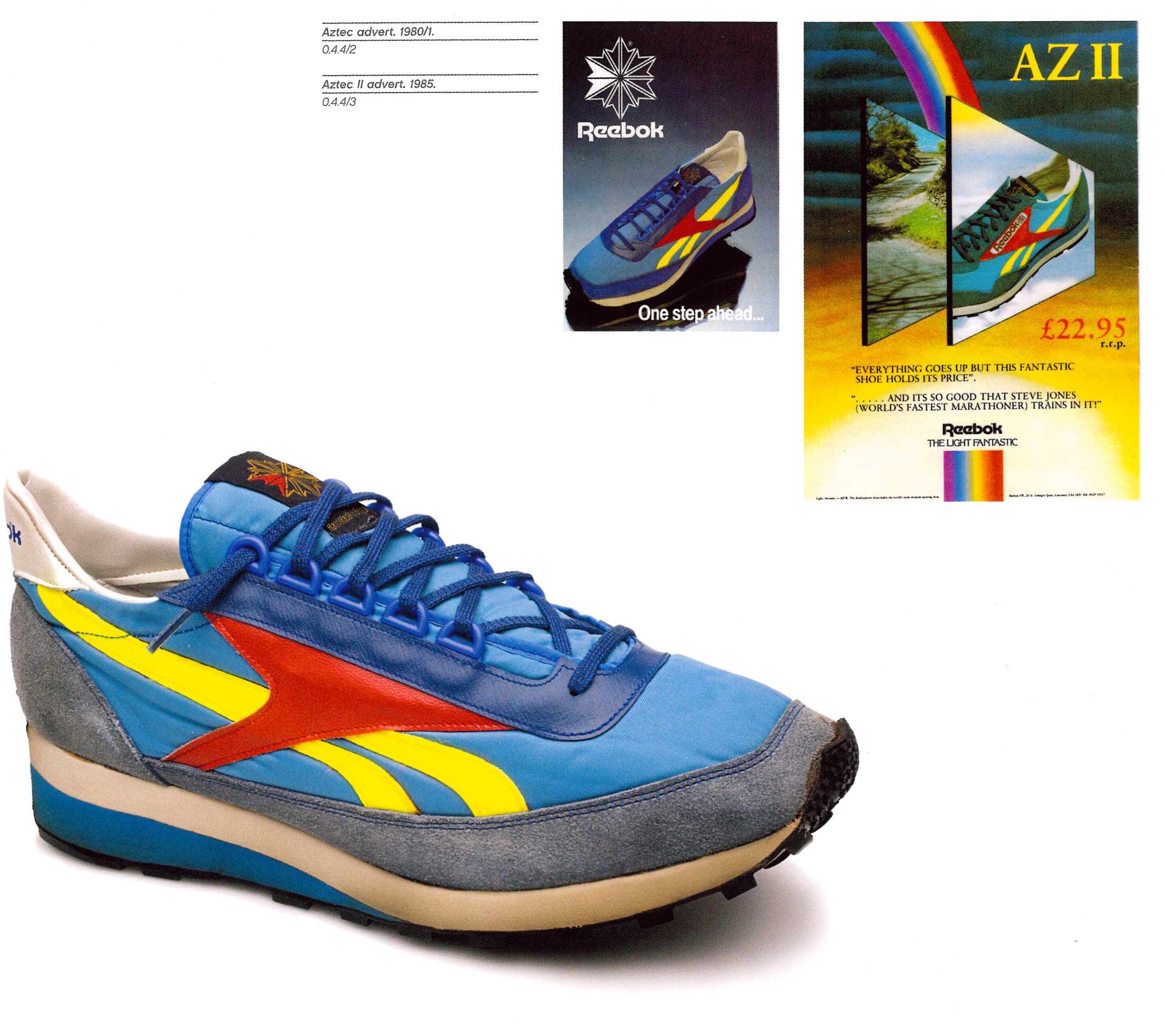
Image Credit: Reebok
When the ’80s called, Reebok’s popularity and cultural reach only grew stronger. The next few decades were just as imperative as the others that came before it and propelled the Bolton brand to even higher status, particularly with its Classic, Club C and Instapump creations. Check out what those lineages are up to these days before you checkout.
Still here? Discover the history of even more brands over on the size? blog.
Share This: